Are We Assessing Learning — or Just Outputs — in the Age of AI?

PUBLISHED ON:March 9, 2026

Whether in schools, universities, or training institutions, one reality is now unavoidable:
Students can generate high-quality answers in seconds using AI.

So the question is no longer “Can they submit good work?”
It is “Can they think independently when it matters?”

Many institutions have digitised assessments without redesigning them. Online quizzes, written assignments, and take-home tasks often mirror traditional sit-in exams — definitions, explanations, structured responses.
Yet students still face controlled, invigilated exams, professional board assessments, or real-world performance expectations that require:

  • Independent reasoning
  • Memory retrieval
  • Cognitive stamina
  • Performance under pressure

At the same time, the modern workplace demands:

  • Critical AI use
  • Transferable thinking
  • Problem-solving in unfamiliar contexts

This is not a simple choice between “exam prep” and “authentic learning.”
It requires a layered assessment architecture.


A model that balances four essential functions:


Retrieval & Fluency.
Timed, independent assessments that build memory and exam resilience.


Structured Application
Guided analytical tasks where reasoning steps matter more than polished outputs.


Authentic Performance
Real-world, transfer-based tasks with process visibility and oral defence.


Metacognitive Development
Reflection that strengthens learning agency and reduces passive AI reliance.
AI does not need to be banned.  It needs to be categorised:
AI-Prohibited
AI-Restricted
AI-Integrated
The goal is not surveillance. It is cognitive formation.

Students must be able to:
Retrieve knowledge independently
Apply concepts under pressure
Use AI critically
Perform without technological assistance when required

The institutions that thrive in this era will not be those that digitise assessment.  They will be those who redesign it.
The real question for educational leaders is this:
Are our assessments building capability — or merely generating impressive-looking submissions?


Related Posts

Scaffolding OER Co-authoring in Teacher Education at EMASA 2026

Event: EMASA 2026 Date: 19 September 2026 Presentation: Scaffolding OER Co-authoring in Teacher Education: Towards a Contextually Responsive Training Model Research themes: Open Educational Resources (OER) | Teacher Education | Open Educational Practices | Professional Development | Contextually Responsive Education I will be presenting at EMASA 2026 on research exploring

Discover More »

Unlocking Education Through Open Resources

“On 20–21 July, Dr. Belinda van der Westhuizen facilitated a two-day, hands-on professional development workshop on Open Educational Resources (OER) for academic staff from across the different divisions of Walter Sisulu University. The interactive workshop provided participants with practical experience in finding, evaluating, adapting, creating and openly licensing educational resources,

Discover More »

AFRICA RESEARCH SCHOOL MENTORSHIP PROGRAM

AFRETEC NETWORKBY CARNEGIE MELLON–AFRICA University of Nairobi – June 15–17, 2026 Workshop Venue: Pride Inn Azure Accommodation: Golden Tulip Westlands Director of Program: Prof Adekemi Sekoni Theme: Networking, Collaboration, Publications & Grant Proposal Development Purpose: To foster the Africa Research School mentor-mentee journey by equipping participants with practical skills in

Discover More »

2026 INT’L Conference & Workshop

Date: 11–15 MAY 2026

Time: 9 AM DAILY

Conference Theme:
Rebranding Education Through Digital Technologies

Workshop Theme:
Understanding Open Education Resources (OER) and their Uses for Effective Teaching & Learning

Discover More »

The Department of Higher Education and Training

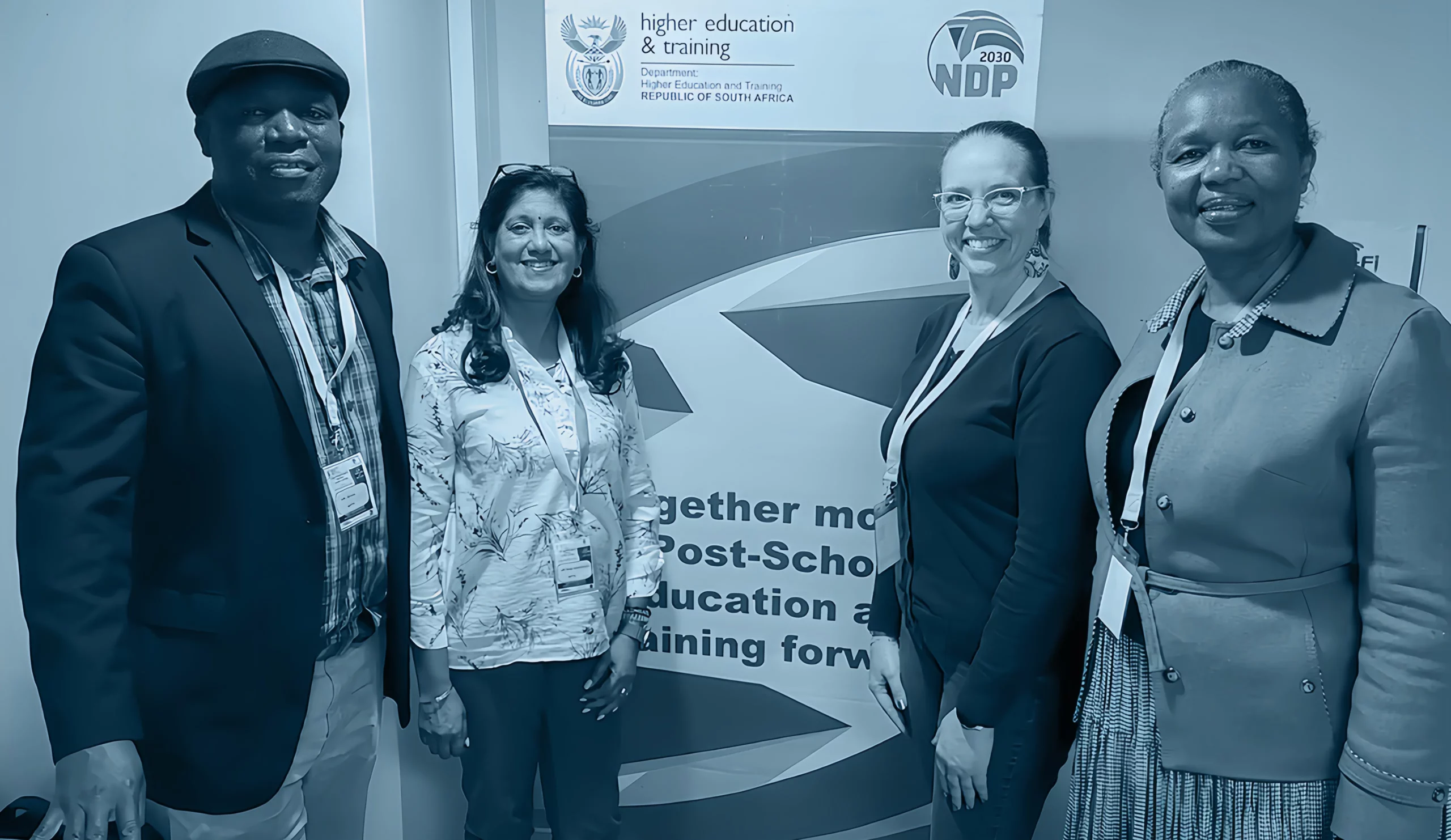
The Department of Higher Education and Training successfully convened a three-day National Open Learning Workshop held from 24-26 March 2026, a strategic engagement aimed at strengthening the implementation of the Open Learning Policy Framework across the Post-School Education and Training (PSET) sector.

Discover More »

SACAI AI Symposium 2026

The future of education and innovation is here. The SACAI AI Symposium brings together ideas, technology, and opportunity in one inspiring event. This is an open invitation to all ticket holders and those eager to explore the growing impact of Artificial Intelligence in education and beyond

Discover More »

Advancing Open & Blended Learning

Dr Belinda recently participated in and contributed to the National Workshop on Open Learning for Schools of Education, hosted by the Department of Higher Education and Training in collaboration with the Commonwealth of Learning.

Discover More »